

A Sunday trip to Muiderslot with my husband was a fantastic retreat from daily life. Muiderslot is a mediaeval castle near Muiden. A short drive from Amsterdam, the castle took us to the days of knights, poets, and Renaissance glory.
Dating back to the 13th century, Muiderslot stood majestically against the beautiful blue sky with a rich history. This fortress, which was constructed by Count Floris V in 1285 to regulate the strategic trading route along the Vecht River, has endured centuries of turmoil, including its destruction and subsequent reconstruction in 1370. The castle’s illustrious history, significance in the Dutch Golden Age, and architectural magnificence make it a must-see for anybody interested in the historical and cultural progress of the Netherlands.
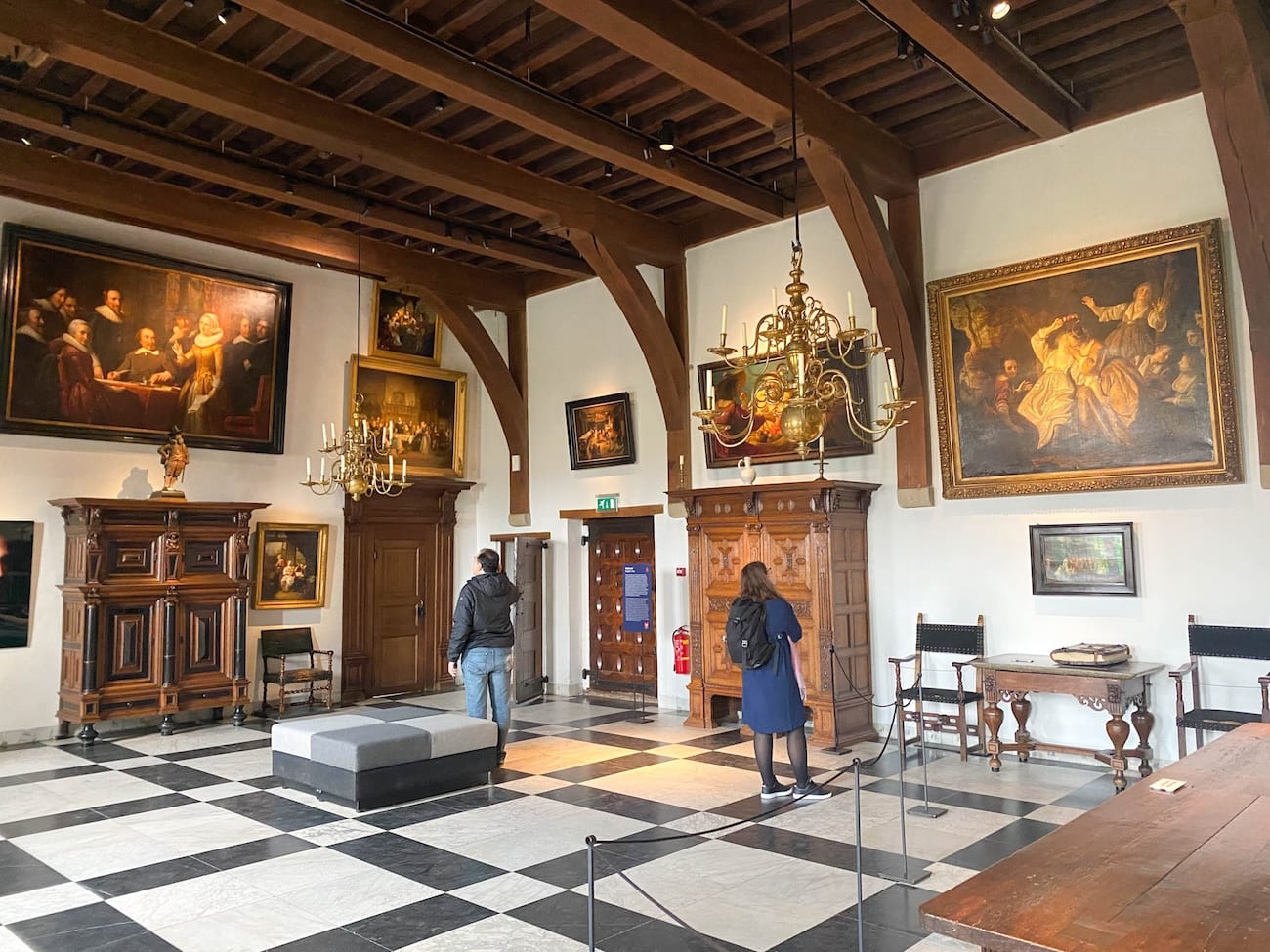
We started our journey by exploring the castle’s beautifully kept interior. Walking through the beautiful halls, we admired at the intricate craftsmanship that had stood the test of time. The knights’ hall, with its spectacular armour exhibits and mediaeval weaponry, offered a peek into the lives of the nobles throughout the Middle Ages. Every single room in the castle, from the exquisite suites to the armoury, served as a gateway into the past, telling tales of the renowned individuals who had once called these walls home.
During our trip, we learnt about P.C. Hooft, a poet, playwright, and historian who lived in the 17th century and was responsible for transforming Muiderslot into a cultural hotspot during the Dutch Renaissance. This was a very fascinating aspect of our excursion. Hooft, who was Muiden’s sheriff and bailiff, hosted the renowned “Muiderkring” (Muiden Circle) in the castle. This event brought together some of the most prominent intellectuals, artists, and writers of the day. The castle’s rich legacy of intellectual and creative exchange has provided us with a far deeper appreciation for its historical significance.

The castle’s surroundings were equally captivating. After exploring the interior, we strolled through the beautifully reconstructed 17th-century gardens. The herb garden, with its aromatic plants, and the vegetable garden, meticulously laid out in geometric patterns, provided a serene contrast to the fortress’s imposing stone walls. The gardens, designed to reflect the horticultural practices of the Renaissance period, were not only aesthetically pleasing but also offered insights into the practical aspects of castle life. We took our time wandering through the pathways, taking in the vibrant colours and the scent of fresh herbs, which seemed to transport us to a simpler, more pastoral time.
Following our exploration of the castle and its grounds, we decided to head to a nearby café for a late lunch. Muiden, with its charming cobbled streets and traditional Dutch houses, provided a picturesque setting for our meal. Nestled along the waterfront, the café we chose provided a perfect view of the castle and the surrounding town. The atmosphere was cosy and welcoming, with a menu that featured a delightful mix of local specialities and international cuisine. We opted for a light but satisfying meal, choosing dishes that highlighted fresh, local ingredients. The leisurely pace of our lunch allowed us to relax and reflect on our visit to Muiderslot. We talked about the fascinating history we had just experienced, the beauty of the castle’s architecture, and how the day had felt like a journey through time.
As the sun set, we decided to return home and enjoying a relaxed drive. It was a day well spent.


 Misscityhopper
Leave a reply to Adarsh G Cancel reply